Burying the Password: What the Passkey Transition Really Means for American Consumers
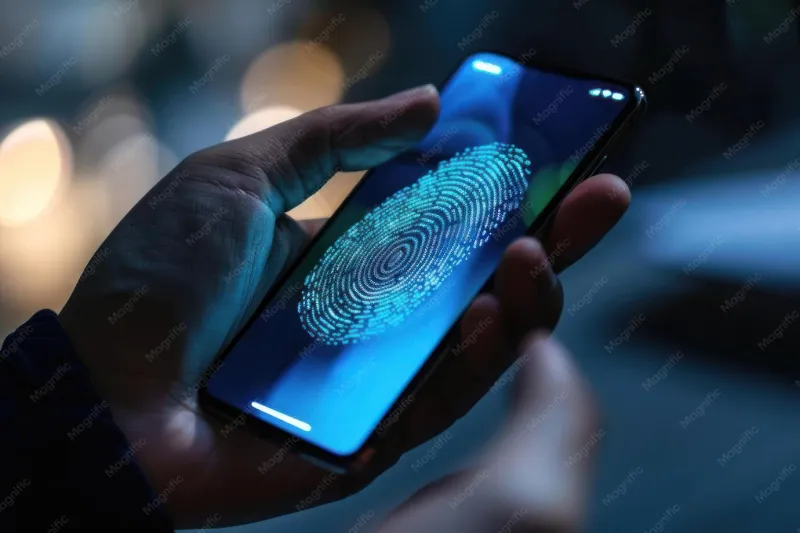
Photo: person unlocking smartphone with fingerprint passkey security, via img.freepik.com
There is a moment, familiar to anyone who has worked in information security, when a technology that has been discussed for a decade finally crosses into the mainstream. It does not announce itself with fanfare. It simply appears in the settings menu of your bank's mobile app, one line beneath "Change Password," and the era quietly turns.
That moment has arrived for passkeys. Over the past eighteen months, a striking range of American institutions — from national banks and brokerage firms to big-box retailers and the largest technology platforms — have begun offering, and in some cases nudging users toward, passwordless sign-in. The password, that fifty-year-old compromise between usability and security, is finally facing a credible successor. Whether the transition serves the people making it is a more complicated question.
What a Passkey Actually Is
Strip away the jargon and a passkey is a pair of cryptographic keys generated on your device. The private key never leaves your phone or computer. The public key is handed to the website during setup. When you sign in, the service issues a challenge that only the private key can answer. Your device confirms your identity with a fingerprint, a face scan, or a PIN, and the exchange completes.
The critical property is what never travels. Because the secret credential stays on your hardware, there is nothing for a phishing site to steal. A fraudulent page mimicking your bank's login cannot harvest a passkey the way it harvests a typed password, because the cryptographic handshake is bound to the legitimate domain. This is what security professionals mean when they call passkeys "phishing-resistant" — the attack that defined the last two decades of cybercrime simply stops working.
It also means there is nothing to reuse. The catastrophic habit of recycling one password across a dozen services, which turns a single breach into a domino run, becomes structurally impossible.
Why Banks Are Moving First
Financial institutions have both the strongest incentive and the clearest mandate. Account takeover fraud costs American banks billions annually, and credential stuffing — replaying passwords stolen from other breaches — remains the dominant attack vector. A credential that cannot be phished or replayed eliminates the problem at the root rather than layering more friction on top of it.
Retail and consumer platforms have followed, but for a different reason: conversion. Abandoned carts traced to forgotten passwords represent measurable revenue, and a sign-in flow that requires nothing more than a thumbprint removes that friction entirely. When security and profit point in the same direction, adoption accelerates.
The Uncomfortable Question of Custody
Here is where the editorial rubber meets the road. A passkey has to live somewhere, and the industry has converged on an answer that should give consumers pause: increasingly, that somewhere is inside a corporate ecosystem. Apple syncs passkeys through iCloud Keychain. Google routes them through the Google Password Manager. Microsoft, naturally, uses its own account infrastructure.
For most users this is a net improvement — it solves the recovery problem that plagued earlier device-bound credentials, and losing a phone no longer means losing your accounts. But it concentrates an extraordinary amount of trust in a handful of companies. Your ability to sign in to your bank now depends on the integrity of an account with a platform whose primary business, in several cases, is advertising. A suspension, a regional lockout, or a security failure at the platform level cascades into every service you have chained to it.
There is also a portability concern. Interoperability standards exist and are improving, but the practical experience of moving a lifetime of credentials from one ecosystem to another remains far from seamless. Consumers are being asked to make an architectural decision — which platform holds the keys to their digital life — at the moment they tap "Set up passkey," usually without understanding that a decision is being made at all.
What Smart Users Should Do Now
The transition is happening with or without your participation, and the honest advice is to engage deliberately rather than passively:
- Enable passkeys first on financial accounts, where phishing risk is most concentrated.
- Understand which ecosystem your passkeys sync through, and secure that root account with the strongest available protection.
- Keep a recovery path — a secondary device, a printed backup code — before you delete anything.
- Do not rush to retire passwords everywhere. Many services will support both for years, and a hybrid approach is a reasonable interim posture.
- If you use a dedicated password manager that supports passkeys, consider whether you prefer its custody model to that of your phone's platform vendor.
A Better Lock, But Ask Who Holds the Key
The password deserves to die. It is the single most exploited weakness in consumer security, and phishing-resistant credentials are a genuine, structural improvement rather than another layer of friction. Googglet's position is straightforward: adopt passkeys, starting with your most sensitive accounts.
But adopt them with open eyes. The industry is not merely replacing a technology; it is quietly renegotiating custody of your digital identity, moving it from a secret only you know to a key held on infrastructure a corporation controls. That trade is probably worth making. It should still be made consciously, not by default — because the habits we build in this transition will define the architecture of digital trust for the next twenty years.