The Appliance Nobody Locks: A Case for Treating Your Router Like a Front Door
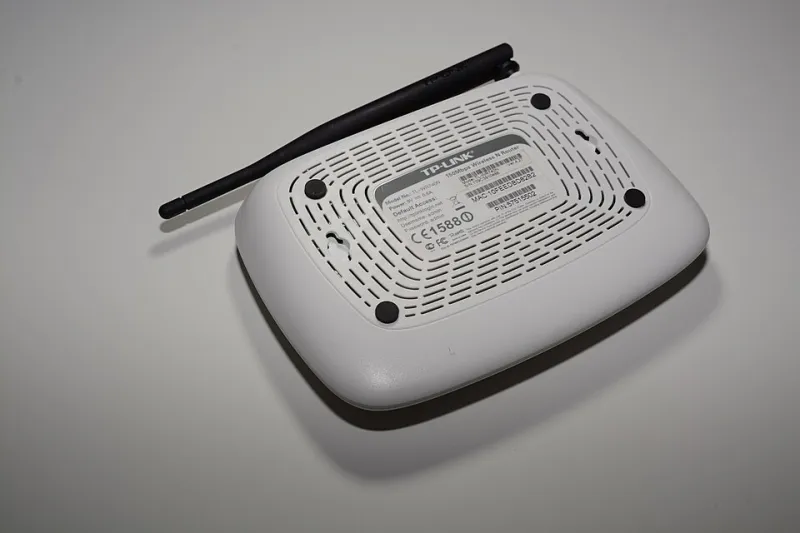
Photo: Hayden Schiff, CC BY 4.0, via Wikimedia Commons
Here is a thought experiment. Imagine a family bought a house with a front door that hadn't been updated since 2019, had a lock with a known defect the manufacturer quietly patched but never auto-installed, and came with a default key that worked in thousands of identical houses across the country. Now imagine the family responded by installing a state-of-the-art deadbolt on the garden shed.
That shed is your smartphone. The front door is your router.
We have developed a national ritual around phone security — passcodes, biometrics, prompt updates, app-store suspicion. Meanwhile, the box that sits between every device in the home and the entire internet routinely runs the same firmware for years, guarded by a password that may still read 'admin.' This is not a niche observation. It is the single most lopsided security trade-off in the modern American household, and it's time we said so plainly.
The Math Nobody Runs
A smartphone holds your photos, messages, and banking apps — a genuine treasure chest. But a compromised router is arguably worse. It doesn't hold the treasure; it controls the road to it. A malicious actor on your router can intercept traffic, redirect you to credential-harvesting lookalikes of your bank, inject content into pages you trust, and quietly observe every unencrypted connection in the house.
The router also touches everything else. The security camera, the smart thermostat, the gaming console, the work laptop, the tablet your kids use for school — all of it passes through a device that, in many homes, was set up once by a cable technician and never thought about again.
How Home Networks Become Botnet Foot Soldiers
The consequences aren't hypothetical. For nearly a decade, researchers and agencies like CISA and the FBI have documented massive botnets — networks of hijacked devices — built substantially from consumer routers. Infamous malware families like Mirai and its many descendants scanned the internet for home devices still using default credentials or running vulnerable firmware, then conscripted them into armies used for large-scale attacks on hospitals, banks, and government infrastructure.
Your router, in this scenario, isn't the target of your data — it's a getaway car for someone else's crime. Owners often never know. The device keeps streaming video and delivering email while, in the background, it participates in traffic floods against targets on another continent. The FBI has periodically urged Americans to reboot their routers specifically to disrupt these infections — advice that treats a symptom of a setup problem most households never knew they had.
Why the Firmware Gap Exists
The router's neglect has structural causes. Phones get updates for years because the manufacturer has a direct relationship with you and a brand to protect. Routers, by contrast, are often sold once and forgotten; some internet service providers ship adequate-but-aging rental hardware and hope you never open the admin page. Manufacturers have historically treated firmware updates as a cost center, and consumers — reasonably — have no way to know a patch exists unless they go looking.
Regulators have begun pushing back. The Biden administration's 2023 cyber trust label initiative and the EU's Cyber Resilience Act both reflect a growing consensus that update behavior should be a selling point, not a buried PDF. But policy moves slowly, and the router in your closet doesn't care about legislative timelines.
The Practical Checklist: Lock the Front Door
None of this requires technical heroism. It requires one evening and the same seriousness you'd apply to a door lock.
1. Change the admin credentials. Not the Wi-Fi password — the login for the router's management page. Default combinations are published in public databases and scanned for automatically. Use a long, unique passphrase stored in your password manager.
2. Update the firmware — then set a calendar reminder. Log into the admin interface and check for updates. If your router's manufacturer has stopped releasing them, that is a security decision masquerading as a product decision, and it's time to replace the hardware.
3. Disable what you don't use. Remote management (accessing the admin page from outside your home), WPS push-button pairing, and Universal Plug and Play are convenience features that expand your attack surface. Turn them off unless you specifically need them.
4. Use WPA3 — or WPA2 with a strong passphrase. Modern routers support WPA3 encryption; enable it. If older devices can't cope, WPA2 with a lengthy, non-guessable passphrase remains acceptable. Never run an open network.
5. Separate the guests and the gadgets. Most routers support a guest network. Put smart-home devices and visitors on it, away from your primary computers. A compromised lightbulb shouldn't share a network segment with your tax documents.
6. Check your ISP's rental hardware. If your provider supplies the router, ask what model it is, whether it receives automatic updates, and when support ends. You are the customer; this is a reasonable question.
7. Reboot occasionally. It's not a fix, but reboots disrupt some memory-resident malware and apply pending updates. It costs nothing.
A Cultural Correction, Not Just a Technical One
The deeper argument here is cultural. Americans have been trained — by banks, by Apple, by a decade of breach headlines — to think of security as a property of devices and accounts. But security is really a property of paths, and the router is the path. Locking the phone while leaving the router on factory defaults is deadbolting the bedroom and leaving the front door propped open with a brick.
The good news is that the fix is cheap, fast, and entirely within reach of anyone who can set up a television remote. One evening of router hygiene — a changed password, a firmware update, a guest network — closes the largest unguarded opening in the American home. We lock the front door without thinking about it. It's time we extended the same instinct to the device that guards every door we can't see.