Smishing Season: Inside the Text Message Economy Built to Steal Your Tuesday
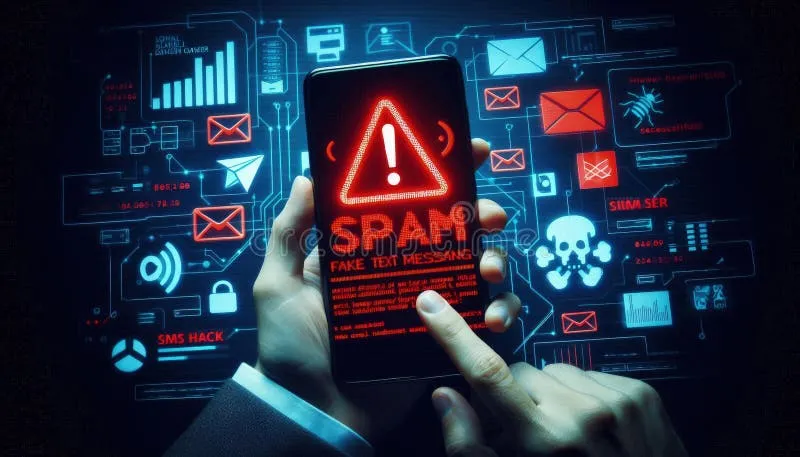
Photo: smartphone receiving suspicious spam text message scam alert close up, via thumbs.dreamstime.com
Somewhere between the third unsolicited text about an unpaid toll and the voicemail from your 'nephew' whose voice sounded just a little too clear, you may have noticed something: scams have gotten good. Not good in the moral sense — good in the operational one. The typo-riddled prince from a decade ago has been replaced by a professionalized pipeline of text campaigns, voice clones, and customer-service-grade follow-up scripts.
This is a guide, not a lecture. Falling for a scam is not a character flaw; it is the result of an industry that spends every waking hour studying how to make you act before you think. The only shame belongs to the people sending the texts.
The Toll Text That Launched a Thousand Clicks
Consider the single most widespread smishing campaign in recent American memory: the unpaid toll notice. A message arrives from a number you don't recognize, referencing a state tolling authority — E-ZPass, FasTrak, TxTag, whatever fits your region — and informs you that a small balance is due, usually under ten dollars.
The genius of the amount is the point. Ten dollars is below the threshold where most people bother to verify anything. It's cheaper to pay a bogus invoice than to spend twenty minutes on hold with a toll agency. Scammers understand this arithmetic perfectly, which is why the fake-toll format has been reported in virtually every state, including ones with no toll roads at all.
The Voice on the Voicemail Isn't Family
Voice cloning has moved from research labs to commodity software. A short sample of a person's voice — pulled from a social media video, a podcast appearance, a voicemail greeting — is enough to generate convincing audio. The classic execution is the 'grandparent scam' upgraded: a distressed 'grandchild' calls, sounds genuinely frightened, and asks for bail money or emergency cash via wire transfer or gift cards.
The tell is rarely in the audio anymore. It's in the ask. Real family emergencies can survive a verification step. A caller who becomes irritated, evasive, or emotionally pressuring when you say 'let me call you back' is telling you everything you need to know.
The Recovery Con: Predators Disguised as Rescuers
Perhaps the cruelest iteration in the current ecosystem is the cryptocurrency recovery scam. Victims of an initial fraud are contacted by 'firm' after 'firm' promising to trace and recover their stolen funds — for an upfront fee. There is no recovery. The second scam monetizes the first, which is why fraud loss figures from the FTC and FBI's Internet Crime Complaint Center keep climbing: victims are being harvested twice.
No legitimate law enforcement agency or regulator will cold-call you demanding a fee to retrieve funds. Anyone who guarantees recovery of stolen crypto is selling you a second theft.
The Psychology: Why Smart People Click
Scam messages work because they compress three levers into a single notification: urgency (act now), authority (this is your bank/the government/a toll agency), and consequence (your account, your license, your package). Under that pressure, the brain's deliberate reasoning gets outvoted by its threat-response system.
Add the fact that texts now arrive in the same inbox as messages from your actual pharmacy and your kid's school, and the context cues we normally rely on begin to fail. Scammers didn't hack your trust — they rented the channel it travels through.
Red Flags Worth Memorizing
- A link that goes somewhere odd. Hover or long-press any URL. Slightly wrong domains are the industry standard.
- Payment in gift cards, wire transfers, crypto, or payment apps. These exist precisely because they are hard to reverse.
- Any request for a one-time verification code. If someone texts or calls asking for the code sent to your phone, they are logging into your account right now.
- Manufactured urgency. 'Within 24 hours' or 'final notice' is a pressure tactic, not a legal deadline.
- An unsolicited contact asking you to move the conversation — to WhatsApp, to Telegram, off the platform where the scam can be reported.
If You Already Clicked: A Calm, Sequential Response
First, no panic. Speed matters more than embarrassment, and nearly every scenario has a recovery path if you act promptly.
- If you entered credentials, change that password immediately — and everywhere else you reused it. Enable multi-factor authentication if it isn't already on.
- If you entered card details, call the number on the back of the card, not any number in the message. Federal protections limit liability for unauthorized charges, but timing matters.
- If you sent money via gift card or wire, contact the issuing company and your bank at once. Some transfers can still be halted.
- If you installed an app or gave device access, uninstall it, run a mobile security scan, and consider a factory reset if behavior seems off.
- Report it. Forward suspicious texts to 7726 (SPAM), file with the FTC at ReportFraud.ftc.gov, and with the IC3 if losses are significant. Reports drive the takedowns that protect everyone else.
If money is gone, notify your bank in writing, keep records, and remember that elder fraud units exist in every state attorney general's office. The system is imperfect, but silence guarantees the scammer keeps the proceeds.
The Bigger Picture
The scam economy thrives on volume and shame — volume to catch enough targets, shame to keep victims quiet. Starve it of both. Talk to the people in your life most likely to be targeted: the relative who pays tolls, the teenager with a crypto app, the small-business owner fielding 'urgent' invoices. A single conversation about the unpaid-toll text does more good than any antivirus subscription.
The twelve-word phrase scammers hope you never Google is, fittingly, the truth about themselves: nobody legitimate needs your code, your fee, or your panic. Everything else is a lookup away.