Peace of Mind, Sold Insecure: A Week in the Life of the Least Protected Camera in Your House
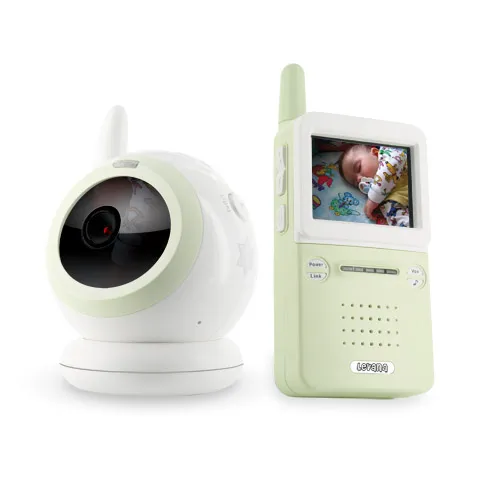
Photo: SVAT Electronics, CC BY 3.0, via Wikimedia Commons
The box promises everything a nervous parent or a guilty dog owner could want: crystal-clear video, night vision, two-way audio, and the word "secure" printed in a reassuring blue. What the box does not mention is that the device inside — a thirty-dollar camera marketed for nurseries, kennels, and living rooms — is often the most carelessly defended piece of technology in an American home.
Consumer cameras built for "peace of mind" occupy a strange corner of the internet-of-things market. They are purchased emotionally, installed in the most private rooms of the house, and then forgotten. To understand how that happens, it helps to follow one hypothetical device through an ordinary week.
Monday: The Setup Nobody Reads
The camera comes out of its packaging and is paired with a smartphone app in under ten minutes. The setup flow asks for a Wi-Fi password, an account email, and a push-notification permission — but never asks the user to change the default administrator credentials, because many of these products do not require an administrator password at all. Some legacy models still rely on a four-digit code printed on a sticker, a scheme security researchers have warned about for the better part of a decade.
The app requests access to the local network, the microphone, and location services. The user, eager to see the nursery on their phone, taps "Allow" through each prompt. Within an hour, a device with a microphone and an always-on lens is live in a child's bedroom, and the only thing standing between it and the open internet is whatever the manufacturer built in — which, in the budget tier, is frequently not much.
Tuesday: The Cloud Intermediary
Most of these cameras do not stream directly from phone to camera. Instead, video travels through the vendor's cloud servers, which allows grandparents in Ohio to watch the same feed from their own devices. That convenience has a cost: the manufacturer now sits in the middle of one of the most intimate video streams a household produces.
The privacy policies governing these streams are often broad. Some vendors reserve the right to retain footage, analyze it, or share anonymized segments with "partners." Whether a given company does so is difficult for an ordinary consumer to verify. What is verifiable is the pattern: the Federal Trade Commission has repeatedly taken action against connected-device makers over misrepresented security practices, and internet-connected cameras have featured in several of those cases.
Wednesday: The Update That Never Comes
Here is where the industry's structural problem becomes visible. A camera is a small computer, and like any computer it needs patches. But the economics of a $30 device do not fund a security team for five years. When a vulnerability is discovered in a discontinued or low-priority model, the fix may simply never ship.
Researchers call this "security debt," and consumer cameras carry more of it than almost any other household category. A laptop has a vendor committed to updates for years. A nursery camera may have a vendor committed until the next product line launches. After that, every unpatched flaw is permanent — and every camera still plugged into a wall socket is exposed to it.
Thursday: What the Neighbors Can See
Not every risk involves the vendor. Many cameras ship with local-network discovery enabled, meaning they advertise their presence to anything else on the Wi-Fi. Others broadcast their own short-range signal for initial pairing. An attacker on a shared network — an apartment building, a shared office, a guest on the home network — can sometimes enumerate these devices, probe them, and in poorly secured models access the feed outright.
The consequences are not hypothetical. Over the past several years, security researchers and journalists have documented countless incidents of strangers accessing baby monitors and home cameras: voices heard through speakers, feeds viewed by people thousands of miles away. In nearly every case, the entry point was something mundane — a default password, an unpatched flaw, a camera that phoned home to a server nobody was monitoring.
Friday: The Retirement Question
By the end of the week, the picture is clear. The camera in the nursery is not malicious, but it is a small, neglected computer pointed at the most private moments of a family's life, running software that may already be abandoned.
That does not mean every camera must go in the trash. It means every camera should earn its place. Here is a plain-language checklist for making that decision:
- Does the vendor still exist, and does the model still receive updates? If the company has folded or the product page lists no firmware in years, the device is a liability.
- Can you set a strong, unique password? If the device cannot be secured with real credentials, it cannot be secured.
- Does it work without the cloud? Cameras that can stream only through a vendor's servers give that vendor permanent visibility into your home. Local-only or locally-controllable options shrink that exposure considerably.
- Is two-factor authentication available on the companion account? If not, a leaked email password is a leaked nursery feed.
- Where is it pointed, and what does it hear? A camera on the front porch is a different proposition from a microphone in a bedroom. Place deliberately.
- When did you last think about it? A device nobody has audited in three years is the connected-home equivalent of a lock nobody has tested.
The Market Follows Attention
The encouraging news is that consumer pressure works. As regulators, journalists, and buyers have demanded better practices, some manufacturers have shipped local-streaming modes, mandatory password setup, and published security pages. California's SB-327 and the federal Cyber Trust Mark program signal that baseline security for connected devices is becoming a legal and commercial expectation rather than a luxury feature.
Until then, the cheapest camera on the shelf will remain the cheapest for a reason. Peace of mind, it turns out, is not something that can be bundled into a $30 device by default. It is something a household has to verify — one setting, one update, one honest question at a time.