Midnight in the Kitchen: Where Your Appliances Send Their Secrets
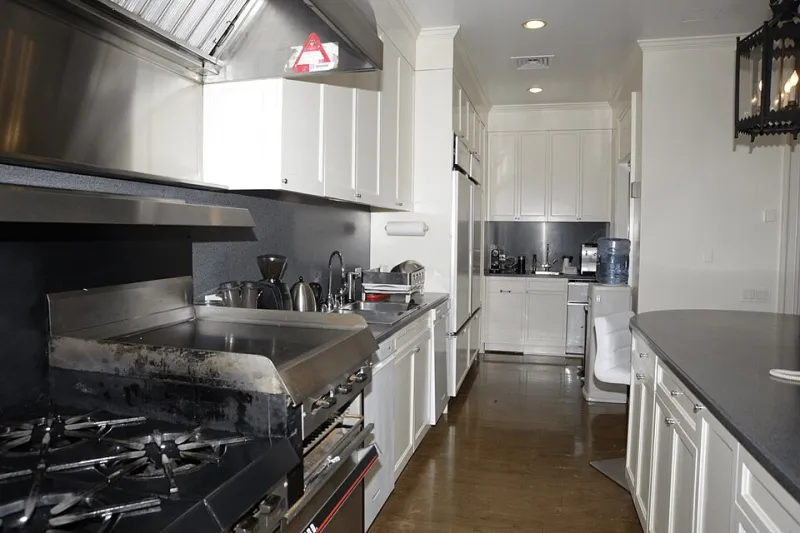
Photo: Federal Bureau of Investigation, Public domain, via Wikimedia Commons
At 2:47 a.m. on a Tuesday, nothing in a typical suburban kitchen is doing anything a homeowner would recognize as activity. The lights are off. The dishwasher finished hours ago. And yet, somewhere in the walls of the house, a refrigerator is awake — opening connections to a cloud server, uploading a few kilobytes of information, and closing the session before anyone stirs.
Multiply that by every connected appliance in the home, and the midnight kitchen becomes one of the busiest rooms in America. Nobody is in it. Everybody's data is leaving it.
The Fridge That Phones Home
Modern smart refrigerators maintain near-constant contact with manufacturer infrastructure. Some of this traffic is genuinely useful: firmware updates that patch security flaws, remote diagnostics that warn of a failing compressor. But security researchers who have inspected appliance traffic consistently find far more than maintenance data flowing outward — usage patterns, temperature adjustments, door-open events, and in some cases account credentials and identifiers that tie the appliance to a household profile.
The destinations matter as much as the contents. Traffic analysis of consumer IoT devices routinely reveals connections not just to the manufacturer's servers but to third-party analytics providers, content delivery networks, and advertising infrastructure. A refrigerator in Ohio may report to a data center in Virginia — and, indirectly, to ad networks whose servers sit in jurisdictions with entirely different privacy laws.
The espresso machine is arguably worse. Many connect to companion apps that log every cup brewed, timestamped and tied to an account. The Bluetooth scale in the pantry records weight trends with clinical precision. Neither device needs to know your ZIP code to function. Both often end up knowing it anyway.
Why This Traffic Mostly Flies Under the Radar
Three structural reasons explain why American kitchens leak so quietly.
First, the data is individually boring. A single door-open event or brewing log seems harmless, which is precisely why consumers don't object to it. Aggregated across millions of households and years of history, however, the same data paints an intimate portrait — when a family wakes, travels, diets, or renovates.
Second, appliances lack screens. A phone asks for permission because it must; a refrigerator cannot. Most appliance privacy policies exist only in a PDF nobody downloads, and consent is implied the moment the device joins the home Wi-Fi.
Third, the network boundary is invisible. Unlike a window or a mailbox, a router gives no visual feedback about what's passing through it. Data leaves the house with the same silence as a draft under the door.
A Room-by-Room Audit You Can Actually Do
The good news: you don't need a degree in network engineering to see what your kitchen is saying. You need an afternoon and a little patience.
Step one: inventory the talkers. List every device in the home that connects to the internet — including the ones you forgot about. The smart plug, the Wi-Fi-enabled crockpot, the TV's voice remote. Most routers have a client list in their admin panel; write it down.
Step two: watch the traffic. Many consumer routers now offer per-device bandwidth or connection logging. For a deeper look, free tools can passively observe which external servers each device contacts. You don't need to interpret packet contents — the destination domains alone are often revealing. A kitchen appliance reaching out to an advertising platform tells you everything you need to know.
Step three: sort by necessity. Divide devices into three buckets: those that need the cloud to work, those that work fine without it, and those whose connectivity adds nothing you use. The voice assistant you speak to daily belongs in the first bucket. The refrigerator's Instagram integration belongs firmly in the third.
Step four: cut the quiet ones off. Most smart appliances function perfectly as appliances. A fridge keeps food cold with its internet disconnected. Consider placing chatty, non-essential devices on a separate guest network or blocking their outbound access at the router — a configuration most modern routers support with a few clicks.
Step five: interrogate the accounts. Every companion app is an account, and every account is a data-retention decision. Check what profile information each app holds, disable optional analytics and personalized-advertising toggles in settings, and delete accounts for devices you've retired. An old appliance's cloud profile outliving the appliance itself is more common than most people realize.
The Policy Gap in Washington
Federal privacy law offers American consumers thinner protection than most assume. There is no comprehensive baseline governing what an appliance manufacturer may collect or how long it may keep it; disclosure requirements vary by sector and state. California's privacy statutes give residents meaningful rights to know and delete, but a family in Missouri or Maine enjoys no equivalent federal backstop for the data trail left by a countertop oven.
Until that changes, the burden of audit falls on the household. It is an imperfect arrangement — privacy by router configuration is a poor substitute for privacy by law — but it is currently the arrangement we have.
A Quieter Kitchen, on Your Terms
None of this argues for smashing the smart home or pretending connectivity has no benefits. Remote diagnostics save service calls; automatic grocery lists are genuinely convenient. The argument is narrower and more reasonable: connectivity should be a choice made knowingly, per device, by the person who owns the appliance.
The midnight traffic will continue regardless. The only question is whether it continues on the manufacturer's terms or yours. An hour with your router's settings, applied room by room, converts an invisible data stream into a map you drew yourself — and a house that talks only when you tell it to.